
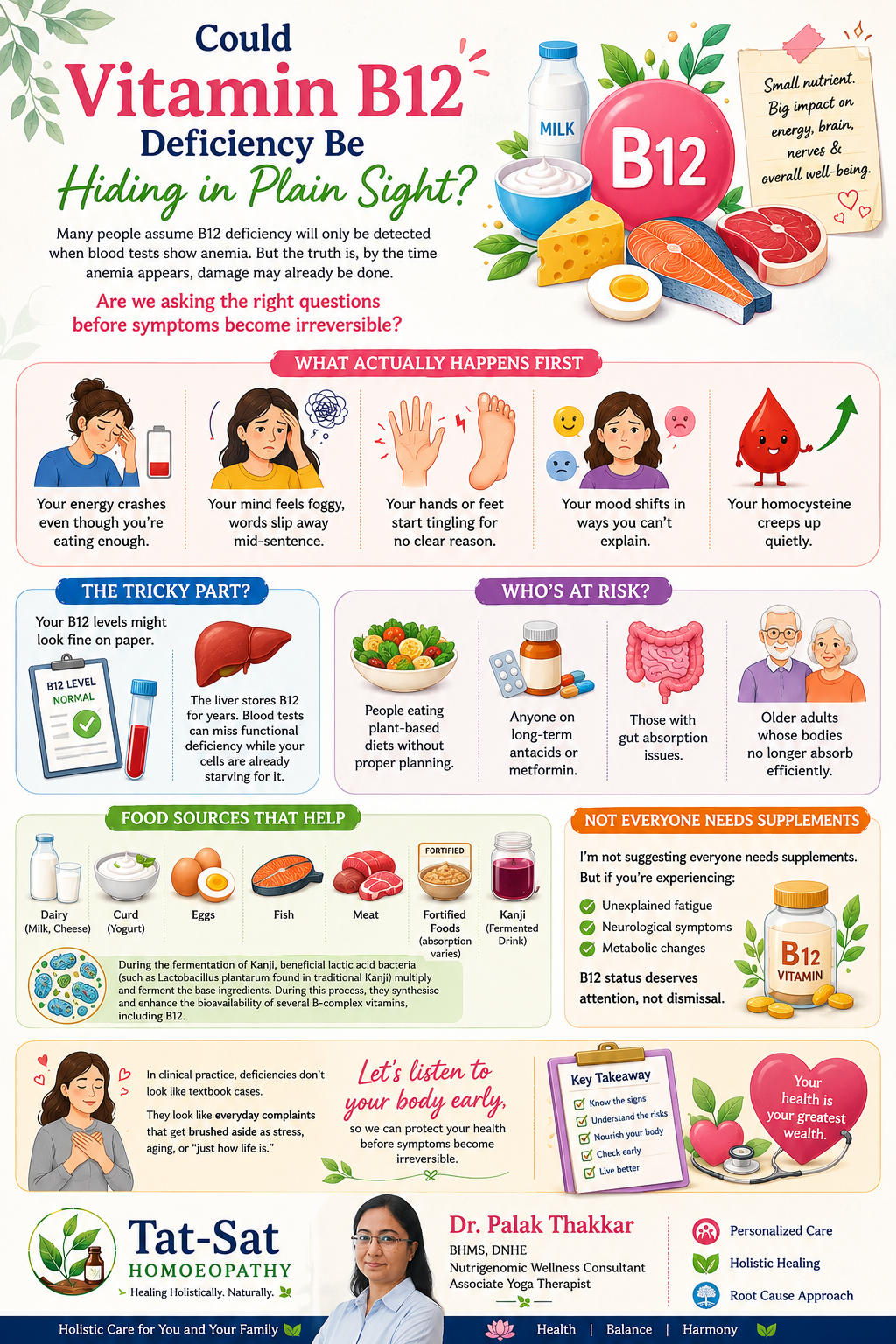
Could Vitamin B12 Deficiency Be Hiding in Plain Sight?
Why Unexplained Fatigue, Brain Fog, and Tingling Sensations Deserve Attention
Many people assume that a Vitamin B12 deficiency will only be detected when blood tests show anemia.
Unfortunately, it is often not that simple.
In clinical practice, Vitamin B12 deficiency can silently affect the body for months—or even years—before obvious abnormalities appear on routine blood reports. By the time anemia develops, some individuals may already be experiencing significant effects on their nervous system, energy levels, and overall well-being.
This raises an important question:
Are we identifying Vitamin B12 deficiency early enough, or are we waiting until symptoms become difficult to ignore?
🧠 What Is Vitamin B12 and Why Is It Important?
Vitamin B12 plays a vital role in:
✅ Energy production
✅ Brain function and memory
✅ Healthy nerve function
✅ Red blood cell formation
✅ DNA synthesis
✅ Homocysteine metabolism
✅ Emotional and mental well-being
Every cell in the body depends on adequate Vitamin B12 to function properly.
When levels become insufficient, the effects can appear in unexpected ways.
⚠️ Early Signs That Are Often Overlooked
Vitamin B12 deficiency rarely announces itself dramatically.
Instead, it often appears as everyday complaints that are easily dismissed as stress, aging, overwork, or poor sleep.
Some common early signs include:
🔋 Persistent fatigue despite eating adequately
🧠 Brain fog and difficulty concentrating
💬 Forgetting words during conversations
🦶 Tingling or numbness in hands and feet
😔 Unexplained mood changes
😴 Low motivation and mental exhaustion
📈 Elevated homocysteine levels
Many people continue struggling with these symptoms without realizing that an underlying nutritional deficiency may be contributing.
🩸 When Blood Tests Look “Normal”
One of the challenges with Vitamin B12 assessment is that blood levels may not always reflect what is happening inside the cells.
The liver stores Vitamin B12 for several years.
As a result:
✔ Blood reports may appear normal
❌ Yet tissues and cells may already be experiencing functional deficiency
This is one reason why symptoms and clinical history remain important alongside laboratory investigations.
Health care should never rely solely on numbers—it should also consider the individual's experience and symptoms.
👥 Who Is More Likely to Be at Risk?
Certain groups are more vulnerable to Vitamin B12 deficiency.
🌱 People Following Plant-Based Diets Without careful planning:
Vitamin B12 is naturally found mainly in animal-derived foods. Without careful planning, deficiency can gradually develop.
💊 Long-Term Medication Users
Certain medications may interfere with Vitamin B12 absorption, including:
- Long-term antacid use
- Proton pump inhibitors
- Metformin
🦠 Individuals with Digestive or Absorption Issues
Conditions affecting the stomach or intestines can reduce Vitamin B12 absorption.
👵 Older Adults
As we age, our body's ability to absorb Vitamin B12 naturally declines.
🍽️ Food Sources That Support Vitamin B12 Intake
Including Vitamin B12-rich foods may help maintain healthy levels.
Excellent Sources
🥛 Milk and dairy products
🥣 Curd (Yogurt)
🥚 Eggs
🐟 Fish
🍗 Meat and poultry
🥣 Fortified foods (absorption may vary)
🌾 Traditional Fermented Foods
Kanji, a traditional fermented beverage, contains beneficial bacteria such as Lactobacillus plantarum.
During fermentation, these microorganisms help improve the bioavailability of several B-complex vitamins and support gut health, making traditional fermented foods an interesting addition to a healthy diet.
🌿 Not Everyone Needs Supplements
Vitamin B12 supplementation is not necessary for everyone.
However, unexplained symptoms should not be ignored.
If you experience:
✔ Persistent fatigue
✔ Brain fog
✔ Tingling sensations
✔ Mood changes
✔ Neurological symptoms
✔ Elevated homocysteine levels
it may be worthwhile to discuss Vitamin B12 status with a qualified healthcare professional.
💚 The Bigger Picture
In clinical practice, nutritional deficiencies rarely look like textbook examples.
They often appear as:
- "I'm always tired."
- "My memory isn't what it used to be."
- "I just don't feel like myself."
- "I thought it was stress."
- "I assumed it was normal aging."
These everyday complaints deserve careful attention.
The earlier deficiencies are recognized, the greater the opportunity to support long-term health and prevent unnecessary complications.
🌸 Final Thought
Vitamin B12 deficiency can quietly affect energy, cognition, mood, and nerve health long before obvious laboratory abnormalities appear.
Listening to symptoms, understanding risk factors, and taking a proactive approach to nutritional health may help identify concerns before they progress.
Sometimes the most important health questions are not:
"What does the report say?"
but rather:
"What is my body trying to tell me?"
👩⚕️ Dr. Palak Thakkar
BHMS, DNHE
Nutrigenomic Wellness Consultant
Associate Yoga Therapist
🏥 Tat-Sat Homoeopathy Clinic
"Supporting holistic health through individualized care, lifestyle guidance, and patient education."
.jpeg)
Share


