
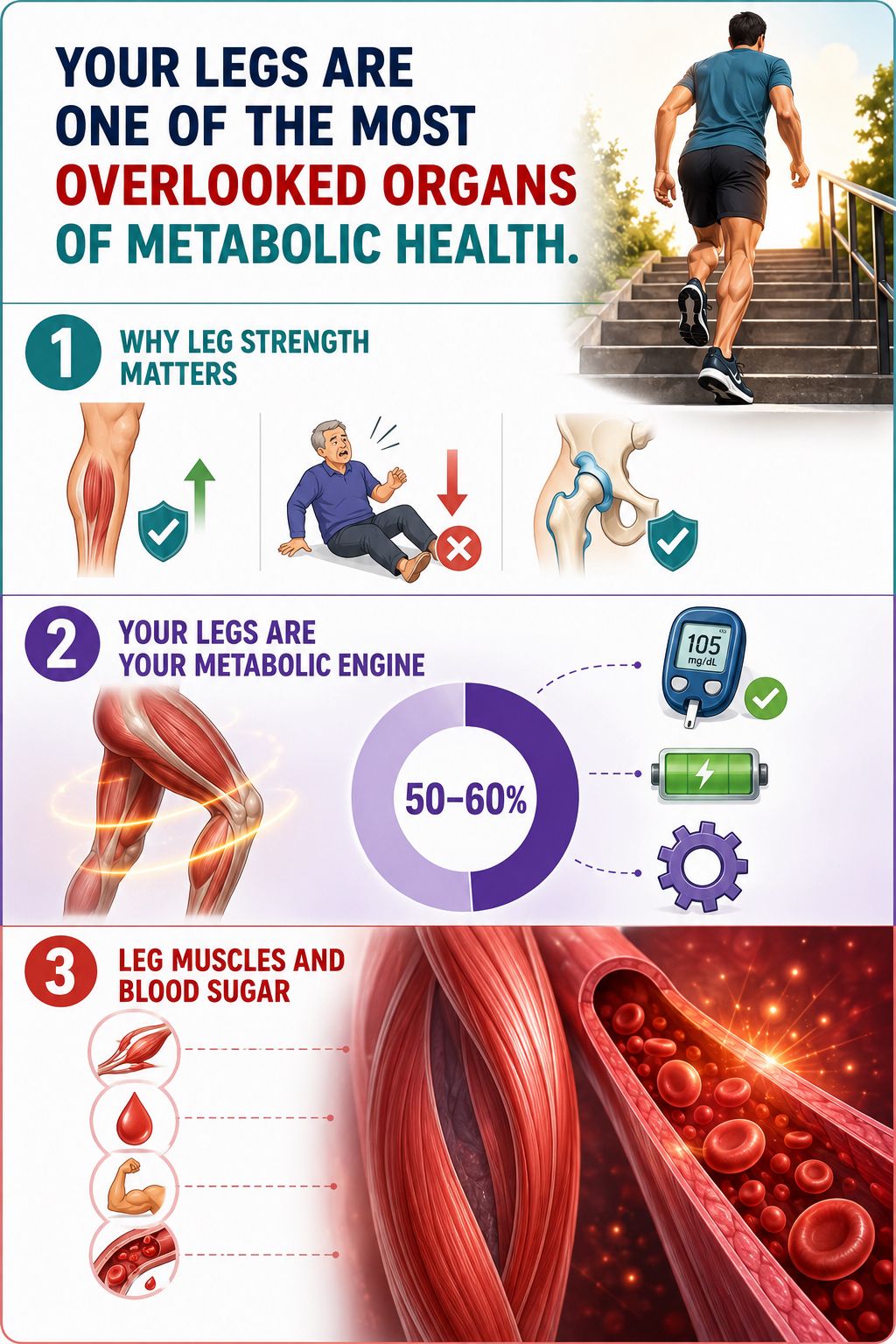
Strong Legs, Strong Metabolism: Why Muscle Matters More Than You Think
When people think about metabolic health, they often focus on calories, hormones, blood sugar levels, or body weight. While these factors are important, one of the most powerful contributors to long-term health is frequently overlooked:
💪 Your Muscle Mass
The muscles you build today can influence your health for decades to come.
Among all muscle groups, your legs deserve special attention. They contain a large percentage of your body's total muscle mass and act as one of the primary sites for glucose uptake after meals.
Simply put, healthy muscles help your body use blood sugar more efficiently.
🌿 Why Leg Strength Matters
Strong legs do much more than help you walk.
They support:
✅ Better blood sugar regulation
✅ Improved insulin sensitivity
✅ Healthy metabolism
✅ Better balance and mobility
✅ Reduced risk of falls and fractures
✅ Greater independence with aging
Every step, squat, climb, and lift contributes to maintaining these benefits.
🩸 The Connection Between Muscle and Blood Sugar
After you eat, your muscles help absorb glucose from the bloodstream.
The more healthy muscle tissue you have, the better your body can manage blood sugar levels.
Research shows that:
✔ Lower muscle mass is associated with poorer glucose control
✔ Reduced muscle strength is linked to decreased insulin sensitivity
✔ Resistance training can improve insulin function and metabolic health
This is especially important for individuals with:
🌱 Insulin resistance
🌱 PCOS
🌱 Prediabetes
🌱 Type 2 Diabetes
🌱 Metabolic Syndrome
⚠ What Happens When Muscle Mass Declines?
Loss of muscle isn't just about weakness.
It can affect:
🔸 Blood sugar control
🔸 Energy levels
🔸 Physical performance
🔸 Balance and stability
🔸 Recovery from illness
🔸 Overall quality of life
Studies have also found that lower muscle strength is associated with a higher risk of disability, fractures, hospitalization, and even mortality as we age.
🏃 Simple Ways to Build and Maintain Muscle
The good news is that muscle responds well to regular activity at any age.
Helpful habits include:
✅ Daily walking
✅ Climbing stairs
✅ Squats and lunges
✅ Resistance band exercises
✅ Strength training
✅ Yoga practices that challenge stability and balance
✅ Adequate protein intake
Consistency matters far more than perfection.
Small efforts performed regularly create significant long-term benefits.
🌸 Muscle Is an Investment in Your Future
Many people view exercise as a way to change appearance.
But muscle is much more than that.
It is a metabolic organ that helps regulate blood sugar, supports healthy aging, protects mobility, and improves resilience throughout life.
Every workout, every walk, and every strengthening exercise is an investment in your future health.
The strength you build today can help protect your independence, vitality, and well-being for years to come.
💚 Final Thought
Your legs are not just for movement—they are one of the body's most important metabolic engines.
Strong muscles help regulate blood sugar, improve insulin sensitivity, support mobility, and promote healthy aging.
Building and maintaining muscle may be one of the most valuable long-term investments you can make for your metabolic health.
At Tat-Sat Homoeopathy Clinic, we believe that true wellness combines nutrition, movement, emotional well-being, and preventive healthcare to support lifelong health and vitality.
Stay active. Stay strong. Stay healthy. 🌿
Dr. Palak Thakkar
BHMS, DNHE
Nutrigenomic Wellness Consultant
Associate Yoga Therapist
🏥 Tat-Sat Homoeopathy Clinic
.jpeg)
Share


